

Hydro Jetting Septic Lines (Homeowners Guide)
When a septic line gets clogged, you usually know pretty quickly. Drains slow down, toilets may gurgle, and wastewater can start backing up into the house.
Nobody wants to deal with that when the problem keeps coming back after a basic drain cleaning.
Hydro jetting is one option for clearing stubborn buildup inside septic lines. It uses high-pressure water to break apart debris and wash it out of the pipe.
In this post, we’ll go over what homeowners should know before scheduling hydro jetting for a septic line.
When Should You Hydro Jet Septic Lines?
Hydro jetting is generally worth considering when a septic line has a stubborn or recurring blockage.
A simple clog may respond well to a drain snake, but heavier buildup can remain attached to the inside of the pipe. That leftover material can cause the blockage to return.
You may want to have a septic professional inspect the line if you notice several drains slowing down at the same time. Repeated backups are another reason to investigate the line instead of simply treating the symptoms.
Here are some common signs of a potential septic line blockage:
- Multiple slow drains in the house
- Toilets that gurgle or drain slowly
- Wastewater backing up into tubs or showers
- Blockages that keep returning
- Sewage odors around drains or cleanouts
Hydro jetting can also make sense when a camera inspection shows significant grease, sludge, mineral deposits, roots, or other buildup inside the pipe.
Still, hydro jetting should not automatically be the first step. A professional needs to figure out what is actually causing the problem.
Also Read: How Often To Pump Septic Tank For Family Of 4
A collapsed pipe, badly cracked line, or failing drain field requires a different solution.
How Does Hydro Jetting Septic Lines Work?
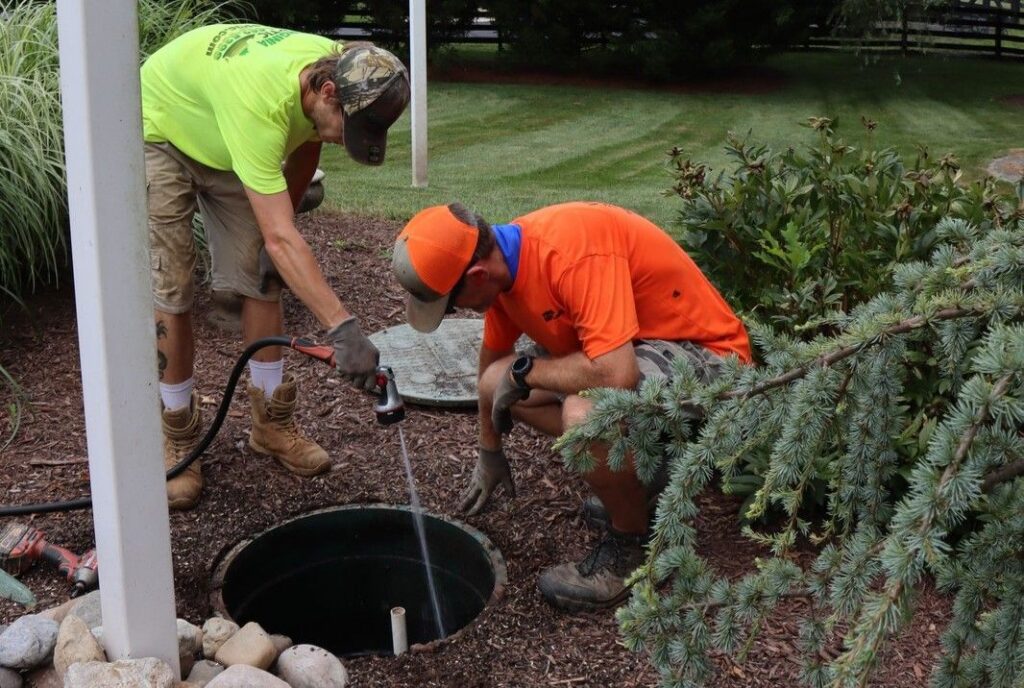
A technician uses a long hose with a specialized nozzle attached to the end. The hose goes into the septic line through an accessible cleanout or another suitable entry point.
Once the equipment is in position, pressurized water travels through the hose and out of the nozzle.
The water pushes against buildup inside the pipe, breaks it apart, and carries the loosened material through the line.
Different nozzles can be used for different types of blockages. Some are designed to clean the walls of the pipe, while others are better suited for heavy debris or root intrusion.
A technician may start with a camera inspection to see what’s happening inside the line. This is useful because you don’t want to blindly blast water into a pipe that might already be damaged.
After the cleaning, another inspection can help confirm that the line is open and that major buildup has been removed.
What Can Hydro Jetting Remove From Septic Lines?
Septic lines can collect all kinds of material over time. Some of it comes from normal household wastewater, while other problems can develop because of the condition of the plumbing or surrounding soil.
Hydro jetting is particularly useful for removing:
- Grease and organic buildup
- Sludge and debris
- Mineral deposits
- Tree roots
- Soap and other residue
- Recurring blockages
Hydro jetting can sometimes cut through and flush out roots. However, that does not mean the root problem is permanently solved.
If the pipe remains cracked or has an open joint, roots may eventually grow back into the line.
This is why recurring root problems often deserve a camera inspection.
Also Read: Septic Tank Lid Replacement Cost
Is Hydro Jetting Safe For Septic Lines?
Hydro jetting can be safe for septic lines when the equipment is used correctly and the pipe is in suitable condition.
A professional should consider the pipe’s material, age, size, condition, and location before choosing the equipment and pressure. Older pipes can be more fragile, especially if they have already developed cracks, corrosion, or other damage.

This is one reason a camera inspection can be valuable before hydro jetting.
If the line is structurally damaged, hydro jetting may not solve the problem. In some cases, aggressive cleaning could make an existing weakness worse.
You also need to keep in mind that hydro jetting cleans the line.
It does not pump the septic tank, repair a broken pipe, or restore a failing drain field.
If your septic tank is full, the tank may need to be pumped. If wastewater isn’t properly leaving the drain field, cleaning the house-to-tank line won’t fix that issue.
Hydro Jetting Vs Snaking Septic Lines
Drain snaking and hydro jetting both deal with blockages, but they work in different ways.
A drain snake uses a cable to break through or pull apart a blockage. It’s often useful for smaller clogs and can be a practical first step when the problem is relatively simple.
Hydro jetting uses high-pressure water to clean the inside of the pipe.
Instead of simply creating an opening through the blockage, the water can remove buildup from the pipe walls as it moves through the line.
Also Read: How Do You Know If You Have A Septic Tank?
That doesn’t make hydro jetting better in every situation. A basic blockage may not require it, and a damaged pipe may need repair instead.
What Should You Do Before Hydro Jetting A Septic Line?
Before scheduling hydro jetting, start by paying attention to what’s happening with your plumbing. Note which drains are slow, how often backups occur, and how long the problem has been going on.
It’s also helpful to tell the technician about any previous septic work.
If the line has been snaked several times or you’ve dealt with recurring root problems, that information can help them decide what to inspect first.
Ask about a camera inspection if the cause of the blockage isn’t obvious.
Seeing the inside of the pipe can prevent you from spending money on a cleaning when the real problem is a broken or collapsed line.
You should also ask what type of septic line is being cleaned and what equipment will be used. A reputable professional should be able to explain the process without making it sound complicated.
Most importantly, don’t treat hydro jetting as a replacement for regular septic maintenance.
How Much Does Hydro Jetting Septic Lines Cost?
Hydro jetting septic lines typically costs between $350 – $1,000, with most homeowners paying around $500 to $650 for a standard residential service.
Easily accessible clogs can start as low as $250, but severe blockages involving heavy tree root intrusion, long pipe runs, or emergency after-hours calls in higher-cost areas like Northern Virginia can range from $1,200 to $2,000.
Plus, most local septic contractors also recommend or require a sewer camera inspection prior to jetting to ensure the line isn’t collapsed or damaged.
This adds an additional $200 to $500 to the overall job price.
Final Thoughts
Hydro jetting septic lines can be a great option for cleaning clogged lines, particularly when heavy buildup, roots, or recurring blockages are causing trouble.
The high-pressure water can clean much more of the pipe than simply punching through a clog.
Still, the service needs to match the problem. A full septic tank, damaged pipe, or failing drain field won’t be fixed by hydro jetting the line.
If you’re dealing with repeated backups or slow drains, have the septic line properly inspected first.
Once you know what’s causing the problem, you can make a much better decision about using hydro jetting, snaking, pipe repair, or another solution.
Your Service Experts

Virginia Septic is a full-service septic company. We do pump outs, inspections, operations and maintenance, repairs, modifications, and full septic system installations. Virginia Septic has been proudly serving the Virginia area since 2010 and is excited to now be serving all of mid-Atlantic Virginia.
Popular Articles


