

How Do You Know If You Have A Septic Tank?
You’d be surprised how many homeowners have no idea what kind of wastewater system their house uses.
It’s one of those things you don’t think about… until something backs up or someone asks, “When was the septic tank last pumped?”
Then suddenly it matters a lot.
Knowing if you have a septic tank isn’t just random trivia about your house. It affects maintenance, repair costs, and even what you can flush down the toilet.
The good news? There are some pretty clear signs.
In this post, we’ll go over 7 signs that your house has a septic tank. We’ll also show you the fastest way to confirm it.
#1. You Don’t Receive A Sewer Bill
This is usually the biggest clue.
If your home is connected to city sewer, you almost always pay a sewer charge.
Sometimes it’s bundled into your water bill. Other times it shows up as a separate line item. Either way, it’s there.
Take a minute and look at your most recent water bill. If you only see charges for water usage and no mention of sewer service, that’s a strong hint you’re on septic.
City sewer systems cost money to maintain, so municipalities don’t quietly provide it for free.
No sewer fee typically means your waste isn’t going to a city treatment plant. It’s probably going into a tank buried somewhere on your property.
Also Read: How Much Does A Septic Design Cost?

#2. Your Home Is In A Rural Or Non-Urban Area
Location is usually the biggest giveaway when it comes to plumbing.
If your nearest neighbor is a quarter-mile away or if you have to drive ten minutes just to find a gas station, the chances of the city running miles of expensive sewer pipes just for a few houses are pretty slim.
Most rural areas rely entirely on septic systems because they are self-contained and don’t require massive infrastructure.
Even if you aren’t in the deep woods, older “fringe” neighborhoods that were built before the city expanded often kept their original septic setups.
You might see a modern housing development across the street that has city sewer, but if your house was built in the 1950s on an old country road, you might still be on the old-school system.
#3. You Have A Large Yard
Septic systems need space. Not just for the tank itself, but for something called a drain field.
That’s the area where wastewater filters back into the soil after it leaves the tank.
Drain fields can take up a decent chunk of land. That’s why homes on tiny urban lots almost always connect to city sewer instead.
If your property includes a wide backyard or side yard and you’ve never seen sewer work near the street, there’s a good chance your wastewater system is underground on your own land.
You might even notice a section of yard where:
- The grass grows a little greener
- The ground feels slightly softer
- There’s a subtle mound or flat rectangular area
Those are common signs of a buried septic tank or drain field.
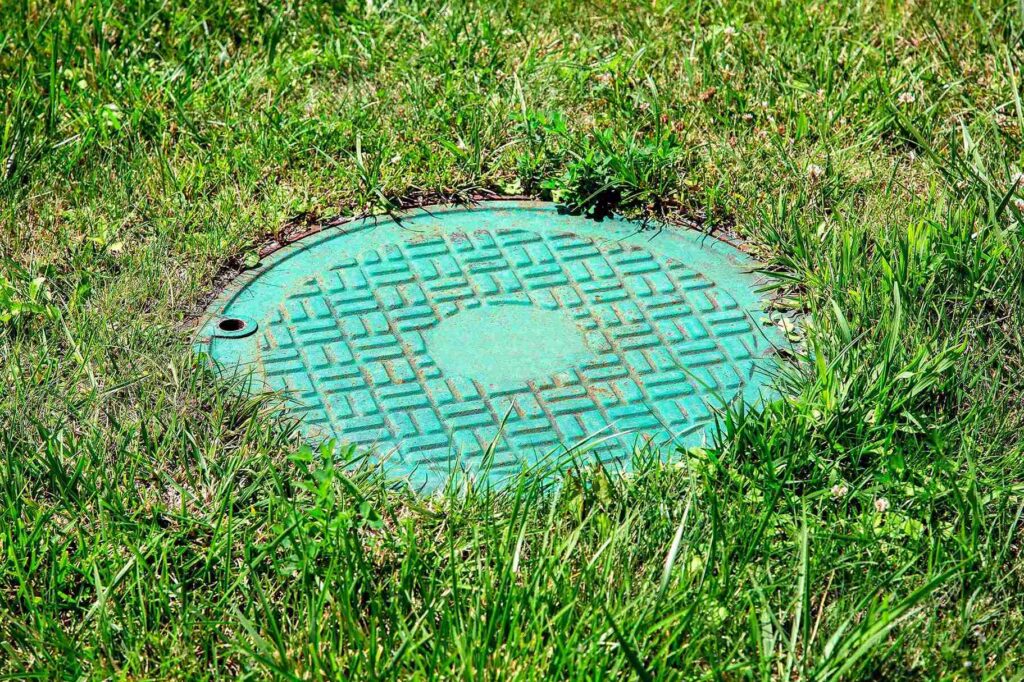
#4. You Notice A Lid Or Manhole Cover In The Yard
This one is more obvious once you know what to look for.
Septic tanks are buried, but they still need access points for pumping and inspections. These usually look like round or rectangular lids, sometimes made of concrete or heavy plastic.
Also Read: Is Scott Toilet Paper Septic Safe?
They’re often 10 to 25 feet away from the house, in line with bathrooms or the laundry room.
If you see what looks like a random manhole cover in your yard, especially in the backyard, that’s probably not decorative. It’s likely access to your septic tank.
Some systems also have small white pipes sticking a few inches above ground. Those are inspection ports.
Again, not something you’d see with city sewer.
#5. Your Home Inspection Mentioned It
If you bought your home in the past few years, go dig up your inspection report.
There’s usually a section that covers wastewater systems.
Home inspectors typically note if a property is connected to public sewer or has a septic system. In many cases, septic systems require a separate inspection before closing, especially if the lender requests it.
Also check your property disclosure forms. Sellers are usually required to disclose the type of sewage system on the property. If it says “septic,” that settles it.
If you don’t have your paperwork, your real estate agent might still have a copy.
It’s worth a quick email.
#6. You’ve Had Septic Pumping Before
This one sounds obvious, but sometimes people forget.
If you’ve ever scheduled a septic company to come out and pump a tank in your yard, you definitely have a septic system. City sewer homes don’t require pumping because the waste flows directly to a municipal treatment facility.
Septic tanks need periodic pumping to remove solid waste buildup.
Most homeowners do this every three to five years, depending on usage and household size.
If a truck has ever pulled into your driveway with a giant hose and pumped something out of your yard, you’re on septic.
Also Read: Roots In Septic System
#7. There’s No Sewer Line Connection At The Street
You can usually spot a city sewer connection just by looking at the road in front of your house.
City sewers require manhole covers in the middle of the street every few hundred feet so workers can maintain the main lines. If your street is just a smooth stretch of asphalt with no metal manhole covers or storm drains, the infrastructure probably isn’t there.
You can also check the curb for any markings.
Often, utility companies will spray-paint or engrave letters like “S” for sewer or “W” for water on the concrete curb to show where the lateral lines connect to the house.
If you see plenty of “W” marks but absolutely no “S” marks anywhere on your block, you’re likely handling your own wastewater on-site.
The Fastest Way To Know If You Have A Septic Tank
If you don’t want to play detective, here’s the quickest way to get a clear answer:
- Call your local health department and ask if there’s a septic permit on file for your address
- Contact your water or sewer utility and ask if your home is connected to municipal sewer
- Hire a septic company to locate the tank using professional equipment
Health departments often keep records of septic installations and permits. If there’s a file tied to your address, you have your answer.
A septic company can also physically locate the tank in your yard. They use probes or electronic locating tools to find it without tearing up your landscaping.
Within one phone call or appointment, you’ll know for sure.
What To Do If You Discover You Have A Septic Tank?
Finding out you have a septic tank isn’t bad news. It just means you’re responsible for maintaining it properly. With regular care, septic systems can last decades.
Here are a few basic things to stay on top of:
- Schedule pumping every 3 to 5 years
- Avoid flushing wipes, grease, or harsh chemicals
- Don’t park or build over the drain field
- Keep records of all inspections and maintenance
Septic systems are simple, but they don’t tolerate neglect very well. A little preventative care goes a long way and can save you from messy, expensive problems later.
Also, if you plan to sell your home someday, buyers will likely ask about the septic system. So keep maintenance records!
Bottom Line
If you’re not getting a sewer bill, live outside city limits, have a big yard, or notice a lid in the ground, there’s a solid chance you have a septic tank.
The fastest way to confirm is a quick call to your local utility or health department.
Once you know what system you have, you’re in control. And honestly, that peace of mind alone is worth the small effort it takes to find out.
Your Service Experts

Virginia Septic is a full-service septic company. We do pump outs, inspections, operations and maintenance, repairs, modifications, and full septic system installations. Virginia Septic has been proudly serving the Virginia area since 2010 and is excited to now be serving all of mid-Atlantic Virginia.
Popular Articles


